
Views: 0 Author: Site Editor Publish Time: 2026-10-15 Origin: Site


Premature filter bag failure is rarely a fabric defect. It is most often the result of improper support structure specification and abrasive mechanical wear. Specifying the wrong wire count, diameter tolerance, or surface finish leads to excessive bag flexing. This causes mechanical abrasion, elevated differential pressure, and eventual emission compliance failures. A systematic engineering approach to filter bag cage selection minimizes operational risks. You achieve this by matching cage metallurgy, structural dimensions, and finishes to the specific pulse-jet baghouse operating environment. We will break down how to evaluate wire spacing, calculate exact diameter tolerances, and select surface coatings that withstand harsh industrial gas streams.
Precision Fit Dictates Lifespan: A cage diameter that is too loose causes excessive fabric flexing during pulsing; too tight prevents proper installation and cleaning. Clearances must be calculated based on fabric type and thickness.
Wire Count and Spacing Depend on Media: Woven fiberglass requires high wire counts (e.g., 20-wire) and tight ring spacing to prevent yarn fracture, while standard felt media can operate efficiently on 10- to 12-wire configurations.
Surface Finish is a Functional Requirement, Not Just Cosmetic: Selecting between galvanized, epoxy, or PTFE coatings requires balancing the chemical composition of the gas stream (moisture, acids) against the risk of weld burrs and corrosion.
Vendor QA Determines Field Success: Strict RFQ specifications regarding weld integrity, burr removal, and shipping packaging are required to prevent installing compromised cages.
Table of Contents
Filter bag cages provide structural support for filter bags in industrial dust collectors, helping prevent fabric collapse during filtration and maintain effective pulse-jet cleaning.
The right cage design should match the filter media, operating temperature, gas composition, and dust collection conditions. Proper selection helps reduce fabric abrasion, improve cleaning efficiency, and extend filter bag service life.
During normal filtration, airflow draws the filter bag against its metal support cage while dust accumulates on the outer fabric surface.
During pulse-jet cleaning, compressed air briefly expands the filter bag to release accumulated dust. The cage supports the fabric throughout these repeated filtration and cleaning cycles.
Explore our Filter Bag Cages for industrial dust collection applications.
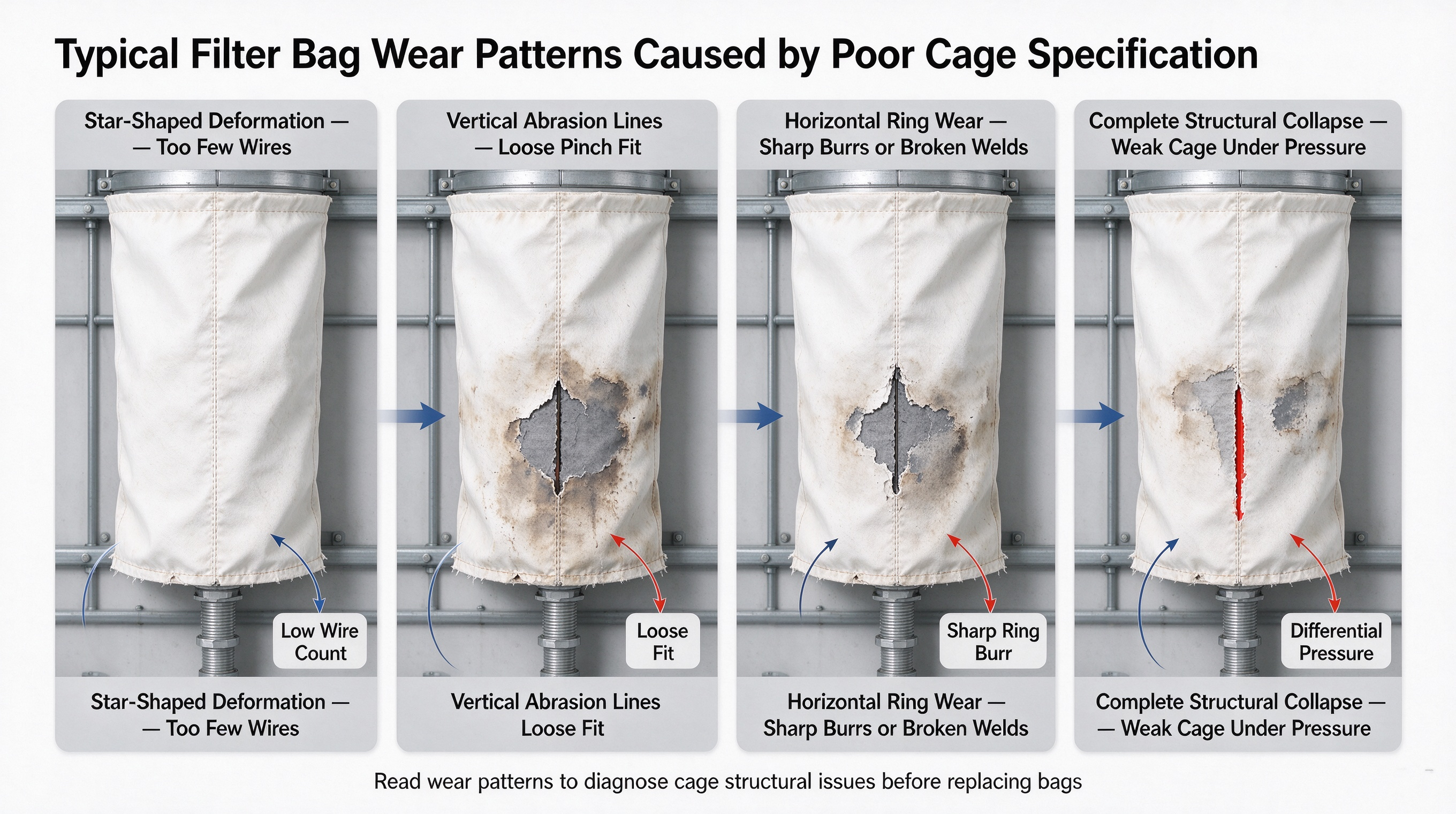
Improper dust collector bag cage design can cause uneven fabric movement, excessive friction, or structural deformation, leading to premature filter bag damage.
Selecting a suitable pulse-jet filter bag cage requires evaluating several factors:
Dimensions: Match cage diameter and length to the filter bag and tube sheet.
Wire Structure: Select appropriate longitudinal wires and ring spacing.
Material: Consider temperature, humidity, and corrosive gas exposure.
Surface Finish: Ensure smooth welds and suitable corrosion protection.
Filter Media Compatibility: Match the cage design to polyester, fiberglass, aramid, or other filter materials.
For compatible filtration media, explore our Industrial Filter Bags.
Properly matching the cage and filter bag helps maintain stable filtration performance, reduce maintenance requirements, and improve equipment reliability.
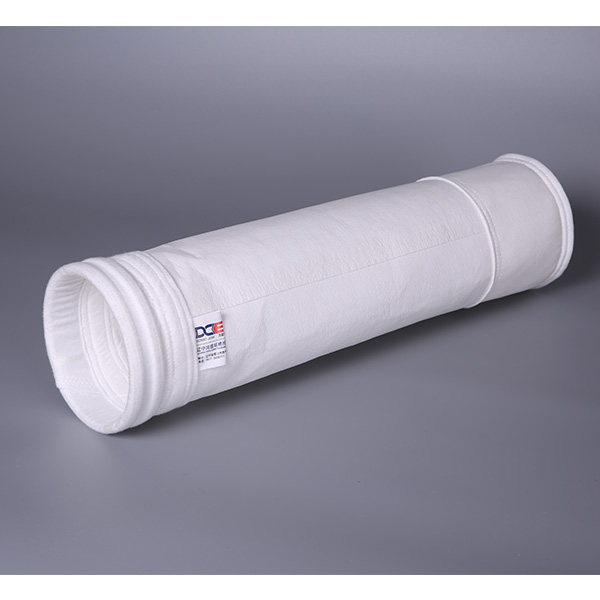
Filter bag cage dimensions directly affect installation compatibility, filter bag support, and dust collector performance. Accurate measurements help prevent poor sealing, excessive fabric wear, and premature filter bag failure.
Before ordering replacement dust collector bag cages, verify the cage outer diameter, overall length, and effective installation length. Measurements should account for existing equipment dimensions, tube sheet clearance, and available space above the dust hopper.
When replacing old cages, compare original engineering drawings with actual site measurements rather than relying on deformed components.
The tube sheet opening must match the cage top configuration and filter bag sealing arrangement. Incorrect dimensions can cause installation problems or allow dust to bypass the filtration area.
Measure several openings when dealing with older or modified dust collectors.
Different filter bag materials require appropriate cage support and clearance. Polyester felt, aramid, fiberglass, and PTFE membrane filters may have different flexibility and abrasion characteristics.
Evaluation Factor | What to Check | Potential Problem |
|---|---|---|
Cage Diameter | Compatibility with filter bag dimensions | Excessive friction or poor fit |
Cage Length | Available installation and hopper clearance | Bottom abrasion or interference |
Tube Sheet Opening | Hole dimensions and top configuration | Installation or sealing problems |
Filter Media | Fabric construction and flexibility | Premature media damage |
For replacement equipment, explore Hongyuan's Filter Bag Cages, available with customizable dimensions and structural configurations.
The structural design of a filter bag support cage determines how effectively it supports the filter media during filtration and pulse-jet cleaning.
Filter cage wire count affects rigidity and support distribution. More longitudinal wires may provide additional support for certain filter media, while fewer wires can reduce cage weight.
The appropriate configuration depends on cage diameter, filter bag material, operating pressure, and cleaning conditions.
Horizontal support rings help maintain cage shape and reduce deformation during operation.
Closer ring spacing can increase structural rigidity, but the final design should balance support requirements, weight, and compatibility with the filter bag.
Round filter bag cages are commonly used in cylindrical baghouse filters. Oval and flat designs may be selected for equipment with specific space constraints.
Custom structures must provide adequate support without creating sharp contact points that could damage the filter media.
Long cages may use segmented designs to simplify transportation and installation in facilities with limited overhead clearance.
Connection systems should maintain alignment, structural stability, and a smooth contact surface.
Cage Configuration | Main Advantage | Suitable Application |
|---|---|---|
Round Cage | Common design, straightforward installation | Standard pulse-jet baghouses |
Oval / Flat Cage | Adaptable to specialized layouts | Space-constrained collectors |
One-Piece Cage | Continuous structure | Facilities with sufficient installation clearance |
Multi-Piece Cage | Easier handling and transportation | Long filters or limited headroom |
Explore our Filter Bag Accessories for compatible cages, caps, and other dust filtration components.
Filter bag cage material selection depends on temperature, humidity, dust characteristics, and corrosive gas exposure. Choosing appropriate metals and surface finishes helps reduce corrosion and extend equipment service life.
Carbon steel is commonly used in general dust collection applications where corrosion exposure is limited.
Stainless steel offers improved corrosion resistance for more demanding operating conditions. Grades such as 304, 316, and 316L should be evaluated according to the specific chemical environment.
Galvanizing and other protective coatings can help reduce corrosion of carbon steel cages. Coating suitability depends on operating temperature, moisture exposure, and gas composition.
Material / Finish | Main Characteristic | Common Application |
|---|---|---|
Carbon Steel | Cost-effective structural support | General dry dust collection |
Galvanized Steel | Added corrosion protection | Suitable industrial environments |
Stainless Steel 304 | Good general corrosion resistance | Humid or moderately corrosive conditions |
Stainless Steel 316 / 316L | Improved resistance to selected corrosive environments | More demanding chemical applications |
Hongyuan offers filter bag cage material options including galvanized steel and stainless steel grades 304, 316, and 316L.
Filter cage welding quality affects structural durability and filter bag protection.
Welded joints should be secure and free from sharp burrs, protrusions, or rough edges that could damage the fabric during repeated cleaning cycles.
Filter bag cage accessories help maintain proper installation, structural support, and cleaning performance. Venturi tubes and cap configurations should match the dust collector design.
A filter bag venturi can influence the airflow entering a filter bag during pulse-jet cleaning.
Whether a venturi improves performance depends on the pulse system design, air supply, filter dimensions, and cleaning requirements. Not every pulse-jet baghouse requires the same venturi configuration.
The cage top should fit the tube sheet and filter bag attachment system correctly.
Suitable top configurations help maintain cage positioning and support reliable filter bag installation. The actual dust seal depends on the complete filter bag and tube sheet assembly.
The bottom cap supports the lower cage structure and should have smooth, rounded transitions to minimize abrasion against the filter media.
Additional reinforcement may be appropriate for long cages or demanding operating environments.
A clear filter bag cage RFQ (Request for Quotation) helps manufacturers understand project requirements and provide accurate quotations.
When requesting customized filter bag cages, buyers should provide:
Cage outer diameter and length.
Longitudinal wire quantity and diameter.
Horizontal ring spacing.
Cage material and protective coating.
Tube sheet dimensions.
Top and bottom cap requirements.
Operating temperature and gas conditions.
Required quantity and delivery schedule.
Hongyuan's Bag Cage Product Page identifies cage dimensions, wire quantity, ring spacing, and tube sheet dimensions as important specification details for customization.
For custom or replacement cages, sample verification can help identify dimensional differences before full production.
Buyers should confirm installation fit, cage alignment, filter bag compatibility, and the smoothness of all contact surfaces.
Delivered cages should be inspected for transportation damage, deformation, damaged coatings, or defective welds.
Damaged components should be assessed before installation to avoid premature filter bag wear.
Inspection Item | Acceptance Focus |
|---|---|
Dimensions | Match approved drawings and tolerances |
Material | Correct steel grade and coating |
Wire Structure | Required wire count and ring spacing |
Welding | Secure joints without sharp burrs |
Cage Alignment | Straight and properly assembled |
Accessories | Compatible caps and connections |
Packaging | Adequate protection during transportation |
A reliable filter bag cage manufacturer should provide consistent dimensions, suitable material options, customization support, and technical documentation.
Hongyuan Envirotech supplies filter bags, supporting cages, and related accessories for industrial dust collection systems.
For complete filtration equipment selection, explore our Industrial Filter Bags to evaluate compatible filter media.
Selecting the right filter bag cage requires more than matching diameter and length.
Buyers should evaluate cage structure, wire spacing, material selection, corrosion protection, accessory compatibility, and manufacturing quality.
Proper cage design supports effective dust filtration and helps reduce unnecessary filter bag wear.
At Hongyuan Envirotech, we provide industrial filter bags, filter bag cages, and filtration accessories for different dust collection applications.
Contact our team to discuss your filter bag cage specifications and customization requirements.
A: Base it on the filter media. Woven fiberglass requires 20 wires to prevent yarn breakage, while standard polyester felts typically require 10 to 12 wires. Heavier fabrics need less support, while delicate membranes require tighter wire spacing to distribute mechanical stress evenly.
A: Clearance depends on fabric thickness, but a general industry rule is a pinch fit allowing a slight fold of fabric. This is typically 1/8 to 1/4 inch of total circumference difference. This allows enough movement for cleaning without causing excessive snap-back abrasion.
A: Upgrade to 304 or 316L stainless steel when the gas stream contains high moisture, acidic or alkaline corrosive gases, or operates consistently above the thermal limits of galvanized coatings. Stainless steel is also required for food-grade applications and high-chloride environments.
A: No. While venturis improve the induction of secondary cleaning air and direct the pulse energy, they can cause pressure drop. Some low-pressure, high-volume cleaning systems operate efficiently without them. Evaluate your specific cleaning energy requirements before specifying venturis.
A: Measure the exact outer diameter using a Pi tape or calipers. Measure the overall length from the underside of the top flange to the bottom cap, and verify the cell plate hole diameter. Never measure a dirty or thermally warped unit pulled directly from service.
A: They bend or collapse due to excessive differential pressure, heavy dust cake buildup, or operating at temperatures exceeding the metal's tensile strength. Using an insufficient wire gauge or inadequate ring spacing for the specific application also leads to structural failure under load.